



Top News

Apply now for the Rising Star Award at ESGAR 2025. Application deadline: April 30, 2024

DATE: November 8, 2024
TOPIC: Hepatocellular Carcinoma (HCC)

April 18 - 19, 2024
Lisbon, Portugal


Membership
Membership of the Society is open to Physicians, Scientists and other Professionals in Europe and outside Europe who have a prime interest in Gastrointestinal and Abdominal Radiology.
Active Member
Physicians, Scientists and other Professionals engaged in European practice (i.e. clinical practice and/or education and/or research) with a special interest in Abdominal and Gastrointestinal Radiology and related research areas.
€ 150.00 per year
Corresponding Member
Physicians, Scientists and other Professionals engaged in clinical practice (i.e. clinical practice and/or education and/or research) outside Europe and with a special interest in Abdominal and Gastrointestinal Radiology and related research areas residing outside Europe.
€ 150.00 per year
Junior Member
Residents (in Europe or residing outside Europe) can become junior members while training for specialisation in General Radiology and/or training for subspecialisation in Gastrointestinal and Abdominal Radiology and/or Interventional Radiology and/or while training for other medical specialties.
€ 75.00 per year
Membership benefits
- Reduced fees for Annual Meetings
- Reduced fees for Workshops
- Exclusive right to participate in society sponsored activities
- Free access to “European Radiology” on-line
- Reduced subscription rate to „Abdominal Radiology“
- Eligibility to participate in Guideline Working Groups
- Eligibility to apply for EDGAR, the ESGAR Diploma
- ESGAR e-Newsletter and Annual Report
- Access to the ESGAR e-Education Portal
- Educational and networking activities

Annual Meeting
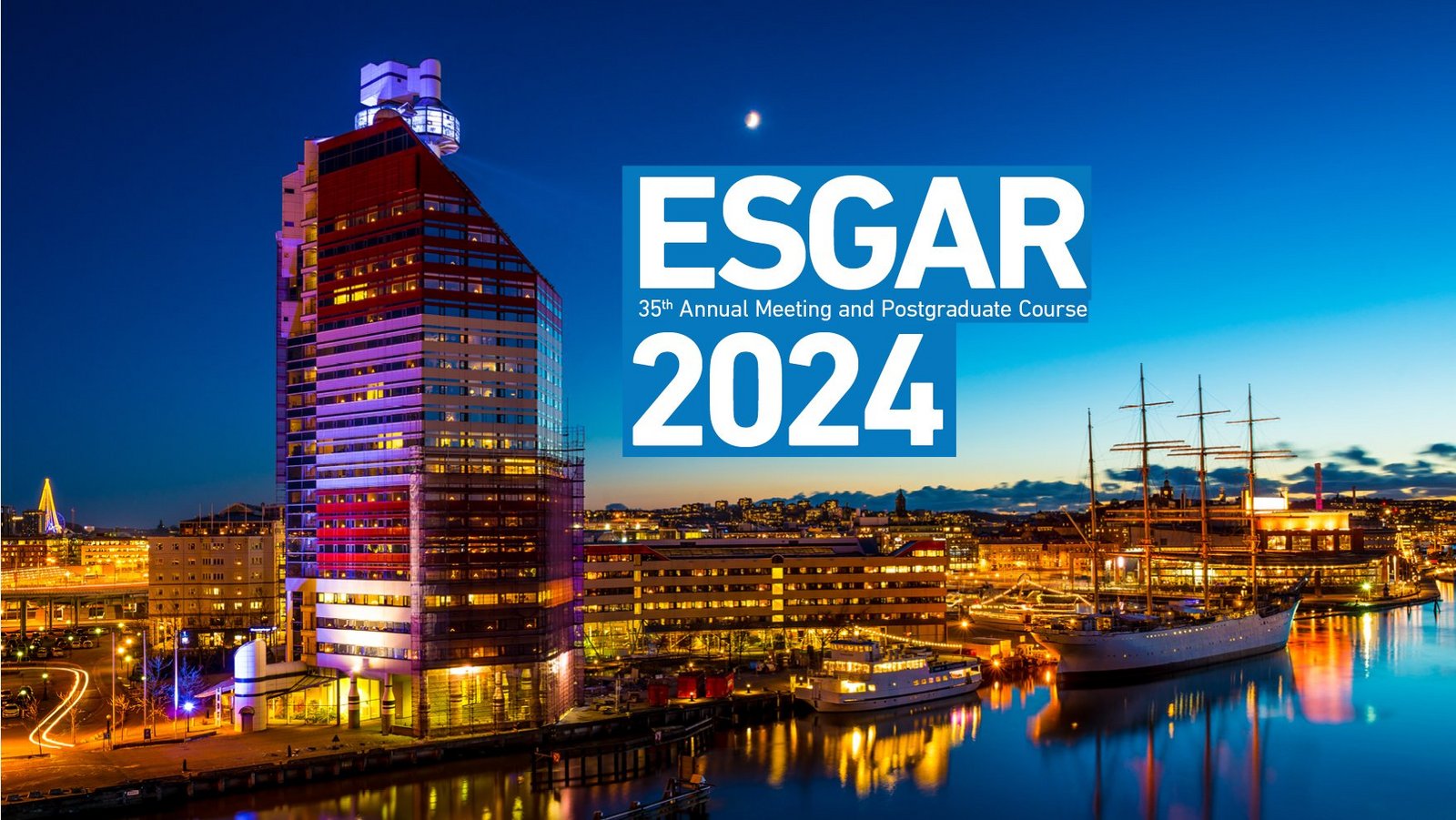
35th Annual Meeting and
Postgraduate Course
May 28 - 31, 2024
Gothenburg, Sweden
Meeting President
Prof. Lennart Blomqvist
Karolinska University Hospital
Department of Diagnostic Radiology
171 76 Stockholm, Sweden
Research
As an international professional and scientific society, ESGAR strongly encourages its members to contribute to this advancement and to healthcare in general. In ESGAR’s vision, research provokes critical-thinking and develops problem-solving skills. It enhances our visibility both within academic circles and amongst the wider healthcare community. Research appeals to the brightest residents, fellows and staff radiologists. It attracts industry support and governmental funds, and influences healthcare financing.
The ESGAR Research Map aims to interconnect ESGAR members by improving the visibility of research lines and topics of ESGAR members in various European institutions. Details provided include principal investigator(s), research topic(s) and departmental websites / personal contact details, where available.
ESGAR Guidelines Research Map Rising Star Award Seed Grants
Junior Research Mentorship Programme Research Fellowship Programme
Visiting PhD Student Programme
Young ESGAR
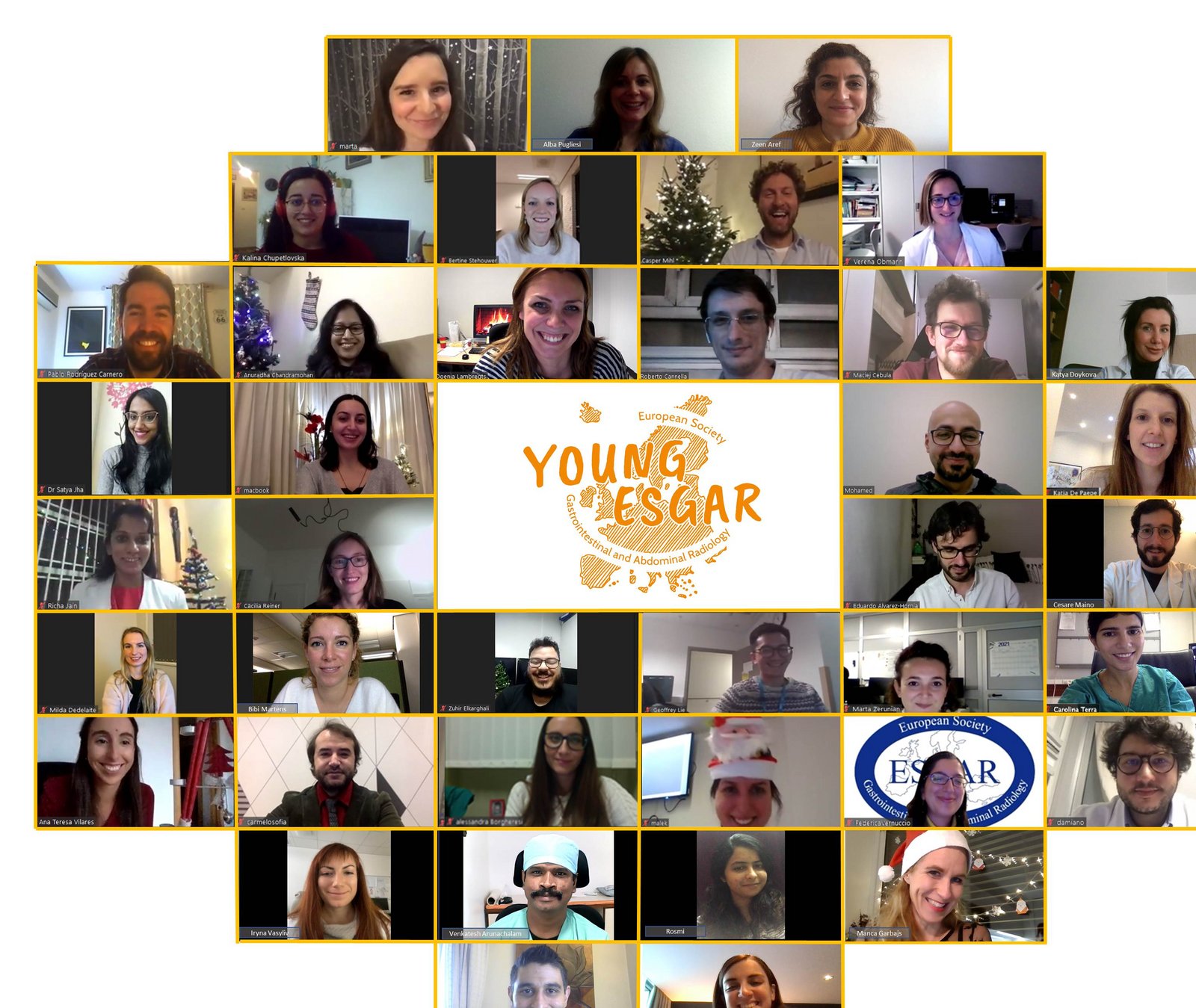
“Young ESGAR (YE)”, an exciting initiative to promote active participation of young members within the vibrant ESGAR community. The main goal of Young ESGAR is to generate a forum of enthusiastic young members to represent the interests of young residents, radiologists and researchers within ESGAR. We aim to create an informal and interactive platform to network, exchange ideas and help shape the future of ESGAR.
Since the launch in 2019 over 100 young ESGAR members from more than 25 different countries worldwide have joined Young ESGAR and now form a dynamic community.
Organisation
Aims of the Society
The European Society of Gastrointestinal and Abdominal Radiology (ESGAR) is a not-for-profit, educational and scientific organisation founded by radiologists working in close association with gastroenterologists, hepatologists, abdominal surgeons, pathologists, and other allied specialists. Its members have a special interest in the imaging and treatment of patients with diseases of the gastrointestinal tract and associated abdominal organs.
Committees and Ambassadors
The Executive Committee is elected via majority by the General Assembly and meets three times a year. Day-to-day management of the Society is carried out by the Executive Board, consisting of the President, the President-Elect, the Vice-President and the Secretary-Treasurer.
The ESGAR Ambassadors play an important role by providing a point of contact and advice in each of the represented countries of Europe and beyond.
Partners
ESGAR is an Institutional Member Society of the European Society of Radiology (ESR) and a Member of United European Gastroenterology (UEG) and represented in their committees. ESGAR has close links and proudly collaborates with its sister societies in Europe and around the world and maintains important connections to clinical societies. Media Partenerships include the ESR Journal Family and Abdominal Imaging.